
The Collaborative Factory Floor: A Strategic Analysis of Cobot Integration


Part I: The Collaborative Revolution—Defining the New Factory Floor
1.0 Executive Summary: The Strategic Imperative of Collaborative Automation
Collaborative robots, or cobots, represent a fundamental divergence from the traditional automation model, signaling a strategic shift in manufacturing philosophy. This evolution moves the industry away from segregated, fixed automation toward highly flexible, human-centric production systems. For Chief Operating Officers and manufacturing executives, this shift is critical for building operational resilience, particularly in the face of persistent labor shortages, rising costs, and the growing demand for customized, niche products.
The market momentum surrounding collaborative automation is substantial and accelerating. Driven by the need to augment human output and address the scarcity of qualified workers, the cobot market is poised for explosive expansion. Projections indicate that the market is expected to surge from $1.5 billion in 2023 to $23.5 billion by 2033. This growth is anchored in tangible, measurable returns. Successful deployments often demonstrate profound productivity gains, sometimes exceeding 144%, and deliver a return on investment (ROI) that can be measured in months, not years. Strategic investment in cobot technology is therefore not merely a tactical cost-saving measure but a strategic imperative for long-term production stability and competitive advantage.
2.0 Cobots vs. Traditional Robots: A Foundational Differentiation
The strategic decision to deploy automation begins with a clear understanding of the core differences between traditional industrial robots and collaborative robots, differences rooted in their fundamental design philosophies.
2.1 Design Philosophy: Augmentation over Replacement
Traditional industrial robots were engineered primarily for maximizing efficiency, precision, speed, and high payload capacity, often operating outside the range of 100 kilograms. Applications historically involve high-volume, repetitive tasks such as heavy welding, painting, and substantial material handling. Due to the inherent risk posed by their speed and power, these systems must operate in segregated environments, typically enclosed within heavy safety cages or barriers to protect human workers.
In contrast, collaborative robots are intentionally designed to augment human capabilities, providing supplementary precision, strength, and data processing capacity. Cobots are built for direct, physical interaction with humans in a common workspace. Consequently, they generally operate at slower speeds and maintain lower payload capacities than their industrial counterparts. Analysis of the market shows that the "up to 5kg" segment accounted for the largest market share in 2024, confirming the strategic focus on light-weight, precise tasks suitable for collaboration. The cobot’s design prioritizes safe interaction and flexibility over raw speed and brute force.
2.2 The Critical Role of Safety Standards (ISO/TS 15066)
The ability of cobots to share a physical workspace with humans is entirely dependent on stringent compliance with specialized safety regulations, primarily the ISO/TS 15066 technical specification, which dictates state-of-the-art safety protocols for Human-Robot Collaboration (HRC) systems.
Cobot manufacturers incorporate design elements such as rounded edges and soft padding to inherently minimize the risk of injury upon contact. Furthermore, ISO/TS 15066 details four main techniques that define collaborative operation, allowing varying degrees of human interaction :
Safety-Rated Monitored Stop: The robot maintains power but ceases motion instantly when a human enters the defined collaborative workspace. Automatic operation can only resume once the human has left.
Hand-Guiding: The operator directly guides the robot's end effector to transmit motion commands, often used for training or complex path adjustments.
Speed and Separation Monitoring (SSM): This technique uses sensors to continuously monitor the distance between the human and the robot/hazard area. The robot's speed is reduced proportionally as the operator approaches a protective distance, and a protective stop is issued if the minimum distance is breached.
Power and Force Limiting (PFL): This is the most critical technique, as it permits physical contact between the robot and the operator. The force applied upon contact is strictly governed by biomechanical data (outlined in Annex A of the standard) to ensure no harm occurs. PFL allows both the person and the robot to move simultaneously within the shared workspace.
The reliance on regulatory compliance, specifically PFL and SSM techniques, fundamentally changes the factory layout. Traditional industrial robots are constrained by physical barriers; collaborative robots, by meeting these safety standards, eliminate or significantly shrink the required operational footprint. This compliance directly yields a strategic operational advantage: the reduced physical space requirement enables manufacturers to rapidly reconfigure production lines, a necessity for serving customized, niche demands without expensive overhauls. Therefore, the technical safety requirement becomes the direct causal factor for accelerated operational flexibility and faster time-to-market for variable product lines.
The operational economics of cobots further amplify this distinction. Industrial robots historically necessitate massive upfront capital investment and complex, fixed infrastructure, primarily restricting their adoption to large-scale enterprises. Cobots, by contrast, offer a fraction of the total system cost, delivering a better ROI profile and providing affordable models that appeal directly to Small and Medium-sized Enterprises (SMEs). This democratization of advanced automation technology serves to level the competitive playing field, allowing smaller firms, previously excluded by high cost and inflexibility, to adopt automation strategies and build operational resilience.
A comparison of the core characteristics of the two primary automation platforms is provided below:
Comparison of Core Robotics Platforms
Attribute | Traditional Industrial Robot | Collaborative Robot (Cobot) | Strategic Implication | Source Citation |
Primary Goal | High speed, brute strength, mass efficiency | Augmentation, flexibility, safe human interaction | Enables high-mix, low-volume production | |
Safety Barrier | Required (safety cages/fences) | Often not required (PFL, SSM certified) | Reduced operational footprint, faster deployment | |
Typical Payload Focus | High (e.g., 100kg$+$) | Lower (predominantly up to 5kg segment) | Focus on precision assembly/inspection tasks | |
Programming Complexity | Specialized expertise, often complex (fixed) | Ease of use, quick reconfiguration | Lower barrier to entry for SMEs |
3.0 The Four Modes of Human-Robot Interaction (HRI)
The transformation of the factory floor hinges on deliberately defining how humans and robots share space and tasks. Process engineers must categorize work cell design based on the level of interaction required, as detailed by industry standards defining the four modes of Human-Robot Interaction (HRI) :
Coexistence: In this simplest mode, the human operator and the robot perform activities separately. Work areas are defined explicitly without overlapping zones, effectively minimizing the risk associated with shared space (e.g., handling tasks in adjacent stations).
Synchronization: The human and the robot share the work environment but execute independent tasks. Their timing is often sequenced, ensuring that one’s action follows the completion of the other's (e.g., a cobot prepares components while a human completes a detailed fastening procedure on a different piece).
Cooperation: The two parties share the work environment, and the task execution occurs in a defined, step-by-step procedure. The tasks are interdependent (e.g., the robot accurately positions a part, and the human performs the subsequent detailed attachment or inspection).
Collaboration: Representing the highest degree of HRI, the human and robot share the work area and execute the task concurrently. This mode typically relies on Power and Force Limiting (PFL) mechanisms, allowing both parties to manipulate the same part simultaneously in a controlled environment.
4.0 Market Dynamics and Financial Outlook
The rapid adoption of cobots is substantiated by strong financial performance and shifting regional manufacturing priorities.
The collaborative robot market is exhibiting explosive growth, projected to achieve a Compound Annual Growth Rate (CAGR) of approximately 15.2% between 2021 and 2030. This trajectory is expected to push revenue forecasts to USD 2506.90 million by 2030, a significant increase from USD 701.56 million in 2021.
4.1 Regional Leadership and Adoption Drivers
Regionally, the Asia Pacific market commands the largest revenue share, accounting for over 38% in 2024, demonstrating its current lead in incorporating this flexible automation. North America follows closely, with the U.S. dominating that regional market. Europe, with a robot density of 208 units per
10,000 employees, also remains a major adopter, with Germany ranking highly on the global automation index.
The key drivers fueling this growth transcend simple technological novelty. The expansion is directly supported by acute shortages of qualified workers, coupled with perpetually increasing labor costs across manufacturing, logistics, and healthcare sectors. For executive leadership, investment in cobots is increasingly viewed as a necessary measure to defy the instability caused by skilled worker scarcity, thereby ensuring the stability of production capacity and mitigating operational risk. The underlying motivation has shifted: automation is deployed not solely for optimizing costs, but for providing essential operational resilience.
4.2 Application Profiles
By application, assembly remains the largest market segment, underscoring the cobot’s advantage in repetitive, high-precision tasks. By industry vertical, the automotive segment dominates adoption, leveraging automation extensively.
The dominant market segment by payload capacity is consistently the "up to 5kg" category, which held over 43% market share in 2024. This specification profoundly shapes the strategic deployment profile of cobots. The focus is overwhelmingly placed on finesse, high-precision assembly, detailed inspection, and electronic component handling, rather than heavy lifting. When production quality is highly sensitive to human variability or fatigue—such as in precise soldering or applying complex moisture insulation seals—the cobot excels by ensuring repeatability and quality. The market clearly prioritizes machines capable of delicate manipulation and precise execution over those optimized purely for brute strength, confirming the core philosophy of augmentation and quality control.
Part II: Quantifying the Transformation—Impacts on Efficiency and Labor
5.0 Operational Efficiency and ROI Metrics
Cobots deliver measurable performance gains primarily by institutionalizing precision, eliminating variability inherent in manual processes, and supporting continuous 24/7 reliability. This results in highly attractive return on investment metrics.
5.1 Quantitative Production Line Improvements
A rigorous comparative study analyzing a production line (contrasting human assembly versus collaborative robot assembly) demonstrated the dramatic operational and environmental enhancements resulting from cobot integration :
Productivity Increase: The line witnessed a productivity surge of 144.8%, resulting in the output of 4,182 more finished products within the same timeframe.
Overall Line Utilization: Utilization efficiency increased by 13.3%.
Cost Reduction: Both operational costs and batch costs were demonstrably reduced.
Sustainability Metric: Beyond financial gains, the implementation reduced the negative environmental impact by decreasing electricity consumption per batch by 47.6%.
The substantial reduction in electricity consumption per batch indicates that cobot efficiency extends into Environmental, Social, and Governance (ESG) performance. By accelerating cycle times and reducing reject rates (thereby minimizing material scrap and unnecessary energy expenditure), cobot investment functions as both a profit driver and a highly measurable sustainability initiative.
5.2 Industry Case Studies: Precision, Speed, and ROI
Specific applications across diverse industries underscore how cobots translate flexibility and precision into competitive advantages.
Automotive Precision (BMW Group): At the BMW Group’s Spartanburg site, cobots are tasked with applying sound and moisture insulation inside the doors of the BMW X3 model. This task was formerly performed manually using rollers, a highly labor-intensive process. The cobots, outfitted with roller heads, execute the job with greater mechanical accuracy, which is critical for protecting the complex electronics inside the door against moisture. This case highlights that the primary metric of success is superior quality control and precision, not merely production speed.
Electronics Assembly (Creating Revolutions): A startup manufacturing hospitality service pagers suffered from double-digit product reject rates due to the inherent difficulty of repeating complex tasks accurately. By deploying a UR3 cobot for tasks such as soldering, drilling, and silicone dispensing, the company reduced rejects to
near zero and achieved an almost five-fold increase in production efficiency. The quantitative efficiency gains achieved are significantly amplified by the qualitative benefit of near-perfect quality and reliability.
Logistics and Fulfillment (DCL Logistics): In high-velocity fulfillment centers, a UR10e cobot was deployed for picking and packing operations. This resulted in a 500% increase in efficiency, delivered 50% labor savings, achieved 100% order accuracy, and provided a rapid three-month ROI.
This performance data demonstrates that the return on investment must be evaluated holistically, incorporating quality failures (scrap, rework, warranty claims) alongside throughput. While industrial robots prioritize speed, cobots generate value through enhanced repeatability and quality, minimizing costly failures downstream.
Measurable Gains from Collaborative Robot Adoption
Metric | Industry/Application | Observed Improvement/Result | Financial/Environmental Impact | Source Citation |
Productivity Increase | Assembly Line (FESTO CP LAB) | $+$144.8% (4182 more finished products) | Decrease in Operating and Batch Costs | |
Efficiency/Accuracy | Logistics/Fulfillment (DCL Logistics) | $+$500% Efficiency Increase; 100% order accuracy | 3 Months ROI, 50% Labor Savings | |
Quality Control | Electronics Assembly (Creating Revolutions) | Reject rates reduced to near zero | Production efficiency increased almost five-fold | |
Energy Reduction | Assembly Line (FESTO CP LAB) | $-$47.6% electricity consumption per batch | Positive environmental/ESG contribution | |
Line Utilization | Assembly Line (FESTO CP LAB) | $+$13.3% Overall | Increased machine uptime (24/7 capability) |
6.0 The New Ergonomics: Redefining the Human Workstation
One of the most profound, yet often underestimated, contributions of collaborative robotics is the transformation of occupational health and worker ergonomics. Cobots enable the shift of human workers away from the "3D" tasks (Dull, Dirty, Dangerous) toward roles requiring cognitive input.
6.1 Reducing Musculoskeletal Disorders (MSDs)
By assuming repetitive, high-force, or awkward tasks, cobots actively mitigate physical strain on human operators. This directly correlates with a reduction in the risk of developing Musculoskeletal Disorders (MSDs). Studies quantifying these health benefits show measurable physical relief: the largest observed reduction in the percentage of MSDs was recorded in the neck region, at
−42.2%. Significant differences were also recorded in the right shoulder, upper and lower limbs, and the lower back. Furthermore, ergonomic assessments using the RULA (Rapid Upper Limb Assessment) scoring method demonstrated a reduction of 5.0% on the right side and 5.7% on the left side in risk scores when operators worked alongside a cobot, indicating improved operator posture and reduced biomechanical strain.
These improvements transform cobots from mere efficiency tools into strategic instruments for preserving human capital. Healthier workers translate into reduced long-term healthcare costs, decreased attrition, and a more engaged, resilient workforce.
6.2 Data-Driven Ergonomic Optimization
The integration of cobots encourages, and even mandates, the use of sophisticated ergonomic analysis. Real-time kinematic data capture, utilizing technologies such as MoCap (Motion Capture) and camera-based systems with infrared (IR) cameras, is now being employed to monitor human movement. This sensor data allows researchers to obtain critical insights into the human musculoskeletal system, tracking body joints, velocities, and the center of mass. This objective data significantly enhances traditional, often subjective, ergonomic assessment methods like RULA and REBA, which typically rely only on visual observation.
While cobots show positive links to improved working conditions , the inclusion of comprehensive ergonomic criteria in the initial design and development phases remains an emergent research topic. This signifies a critical operational challenge: the initial focus may over-prioritize technical capabilities (payload, cycle speed) over human factors engineering (HFE). Sustainable, large-scale adoption requires that manufacturers embed HFE compliance as a
fundamental design parameter, ensuring that the distribution of work between man and machine is truly optimized to eliminate delays and maintain safety.
Ergonomic and Safety Parameters in HRC Workspaces
Parameter | HRC Mode Permitted | Operational Characteristic | Key Ergonomic/Safety Benefit | Source Citation |
Power/Force Limiting (PFL) | Collaboration (Concurrent) | Contact is permitted but controlled by force limits | Reduced risk of acute injury (transient/quasi-static contact) | |
Reduced MSDs (Neck) | General Assembly | Cobot handles physically demanding, repetitive tasks | $-$42.2% reduction in musculoskeletal disorders | |
RULA Score Reduction | Individual Work Situation | Optimized operator posture post-cobot implementation | 5.0% to 5.7% lower physical risk score | |
Speed/Separation Monitoring (SSM) | Cooperation/Synchronization | Robot speed reduces as human proximity increases | Maintained protective distance; prevents physical contact | |
Data Integration | All Modes | MoCap and kinematic sensors used in real-time | Enables objective HFE assessment (RULA/REBA improvement) |
7.0 The Hybrid Workforce: Upskilling and New Career Paths
Cobot implementation rarely results in wholesale replacement of workers; instead, it generates demand for new, higher-value job categories, fundamentally shifting skill requirements across the factory floor.
7.1 From Operator to Orchestrator
The factory of the future requires technicians who are proficient in programming, maintaining, and troubleshooting collaborative robot arms. New job titles emerge, such as Cobot Specialist, Automation Programmer, and Predictive Maintenance Analyst. Workers transition from performing repetitive physical tasks to becoming supervisors and orchestrators of automated assets. This trend is formalized in the concept of "AI middle managers"—centralized software systems that oversee fleets of specialized agents, where a single human supervisor coordinates a network of cobots, each performing a different function.
For operational resilience, cross-training and upskilling technicians to manage these systems is a crucial, high-value investment. This preparation increases organizational flexibility and reduces the risk of single-point failures during maintenance or troubleshooting.
7.2 The Industrial Engineering Imperative
The greatest challenge in scaling HRC is not programming the robot itself, but mastering the industrial engineering needed to "optimally distribute the work between man and machine without adding delays and risking safety". This necessity elevates the importance of human factors engineering and specialized process analysis. New job roles must combine technical coding skills with deep expertise in process flow, focused on defining the precise transition points and interactions required for the four HRI modes (Coexistence, Synchronization, Cooperation, and Collaboration).
While cobots create a host of new, high-tech career opportunities, the preparation required exposes an existing socio-economic vulnerability: the skills gap. As the World Economic Forum forecasts massive integration of AI agents with physical automation , current data shows that 71% of AI-skilled workers are male, suggesting that women are less likely to receive training in emerging technologies. If left unaddressed, the rapid adoption of cobots risks exacerbating existing diversity and participation gaps in STEM fields. Manufacturers must strategically invest in inclusive, proactive training programs to ensure the entire workforce can capitalize on these new automation roles.
Part III: The Flexible Factory of the Future—Integration and Strategy
8.0 Factory Layout Flexibility and Footprint Optimization
The physical characteristics and safety certifications of cobots enable an unprecedented degree of flexibility in production line design, supporting the industry’s ongoing migration toward high-mix, low-volume manufacturing models.
Cobots' small size and requirement for minimal intrusion allow them to be integrated rapidly into existing production lines with minimal disruption. This small operational footprint, combined with integrated processing capabilities, allows the machines to function autonomously rather than relying on centralized cloud controls. This integrated intelligence and physical compactness mean manufacturers can quickly reconfigure cobots to satisfy highly customized product demands without necessitating significant, costly production line overhauls. Crucially, this flexibility supports continuous operations, often enabling "lights-out operations" where production continues efficiently after human workers have departed.
8.1 Integrating Cobots with Autonomous Mobile Robots (AMRs)
The peak expression of operational flexibility is the integration of collaborative robots with Autonomous Mobile Robots (AMRs), creating the Mobile Cobot. This pairing decouples the automation arm from a fixed position, revolutionizing material flow and intralogistics.
Mobile cobots serve crucial functions across high-tech industries. Examples include: automated handling of wafers in sterile cleanroom environments for semiconductor production; intelligently equipping and tending to machine tools; and optimizing logistics tasks such as sorting, order picking, inventory management, and truck loading/unloading.
The logistics sector has been a primary beneficiary of this convergence. For example, Ambi Robotics’ AmbiStack solution, which integrates AI-powered robotic stacking and sorting, was fully reserved by Fortune 500 shipping and logistics customers for 2025 inventory, demonstrating overwhelming market demand. These advanced systems use simulation-to-reality (Sim2Real) reinforcement learning, allowing the platforms to continuously improve performance by leveraging operational data collected in real-world environments post-deployment.
9.0 The Convergence of AI and Collaboration
The future trajectory of collaborative robotics is deeply interwoven with advances in software, moving systems beyond pre-programmed movements toward true machine learning and adaptive intelligence.
Cobot manufacturers are actively developing Machine Learning (ML) systems to allow cobots to "learn" new tasks and expand their capabilities while operating unattended. This is made possible through the rapid advancement of sensors, vision technologies, and Artificial Intelligence (AI), which empower cobots to respond in real-time to dynamic changes in their environment, ensuring both enhanced safety and increased responsiveness when working alongside humans.
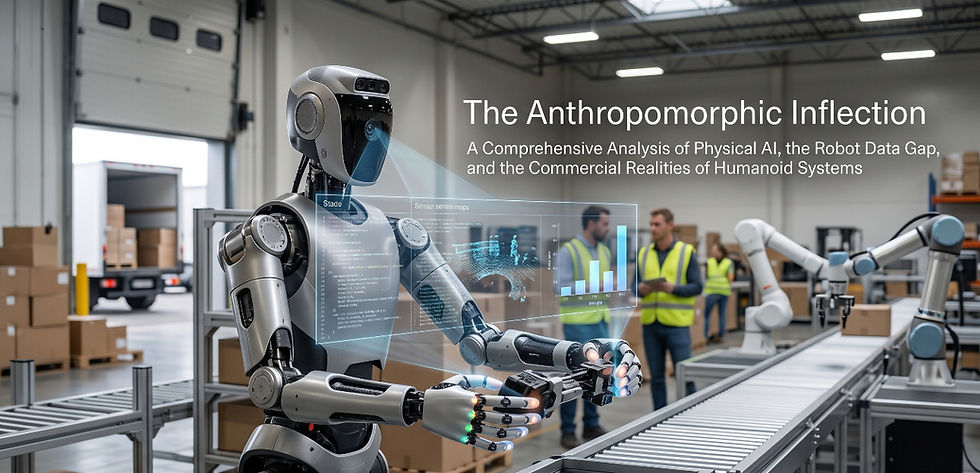
The technological roadmap points toward a multi-platform strategy. Enterprises are now coordinating cobot arms and AMRs within a common orchestration and monitoring layer. This central AI orchestrator manages the entire fleet, maximizing coordinated action and flexibility. Furthermore, executives should begin evaluating complementary roles for emerging humanoid platforms, which may eventually integrate into this orchestrated ecosystem. Humanoids, as they mature over the next decade, will fulfill tasks that specifically require a human form factor, such as navigating complex stairwells or operating human-designed tools.
10.0 Strategic Recommendations and Challenges
While the benefits of cobots are clear, widespread adoption requires executive understanding of the associated operational and economic challenges.
10.1 Key Implementation Challenges
Human Behavioral Variability: Despite advanced safety measures, the inherent variability and dynamism of human behavior remain a complex challenge in designing cobots that can function optimally in complex, shared settings. This makes work cell optimization and safety assurance more difficult than in segregated environments.
Cost Barrier for SMEs: Although cobots are drastically more affordable than traditional robots, the total cost of ownership—including the cobot arm, end-effectors, sensors, and the necessary programming and maintenance—can still limit widespread adoption, particularly among smaller and medium-sized enterprises (SMEs).
System Integration Complexity: Combining diverse robotic platforms (fixed cobot arms, AMRs, and central monitoring software) requires highly specialized system integration expertise and a robust data infrastructure to link all components effectively.
10.2 Strategic Recommendations for Success
Pilot Narrowly, Scale Strategically: Executives should initiate deployment with narrow, repeatable, and bounded pilot programs. These pilots must be designed specifically to accurately measure throughput, safety adherence, and the Total Cost of Ownership (TCO) before considering large-scale deployment.
Mandate Rigorous Compliance and Safety Protocols: Thorough risk assessments compliant with international safety standards, coupled with implementation of multiple safety layers (including documented mitigation measures, hardware interlocks, and software limits), are non-negotiable prerequisites for deployment.
Invest in Data Ecosystems: The value of a cobot is no longer static hardware; it is a data generation platform whose value increases over time through continuous learning. Advanced systems improve performance post-deployment by using data for reinforcement learning and AI retraining. Therefore, the strategic focus must shift toward creating secure, robust, and encrypted data infrastructure capable of supporting this continuous learning process.
Prioritize Workforce Cross-Training: The upskilling of technical staff in programming, maintenance, and complex troubleshooting must be viewed as a mission-critical investment that directly improves long-term operational resilience and reduces dependency on external specialists.
Conclusions
Collaborative robots are fundamentally reshaping the factory floor by offering a path to automation that prioritizes flexibility, augmentation, and worker well-being over sheer brute force. The data confirms that cobots deliver profound economic returns—driving productivity gains of over 144% and achieving ROI in a matter of months—while simultaneously addressing critical challenges such as labor shortages and operational stability.
The shift toward cobots represents a move from segregated, fixed assets to dynamic, human-centric production cells that can be rapidly reconfigured to meet customized demand. Future strategic success will be defined by the convergence of mobile automation (AMRs), advanced AI for real-time orchestration, and a strong organizational commitment to upskilling the workforce to manage this increasingly complex, hybrid manufacturing environment. While challenges related to integrating human behavior and managing initial adoption costs for SMEs persist, the strategic advantages of operational resilience, qualitative precision, and human capital preservation render cobots an indispensable component of the modern manufacturing strategy.


Comments